
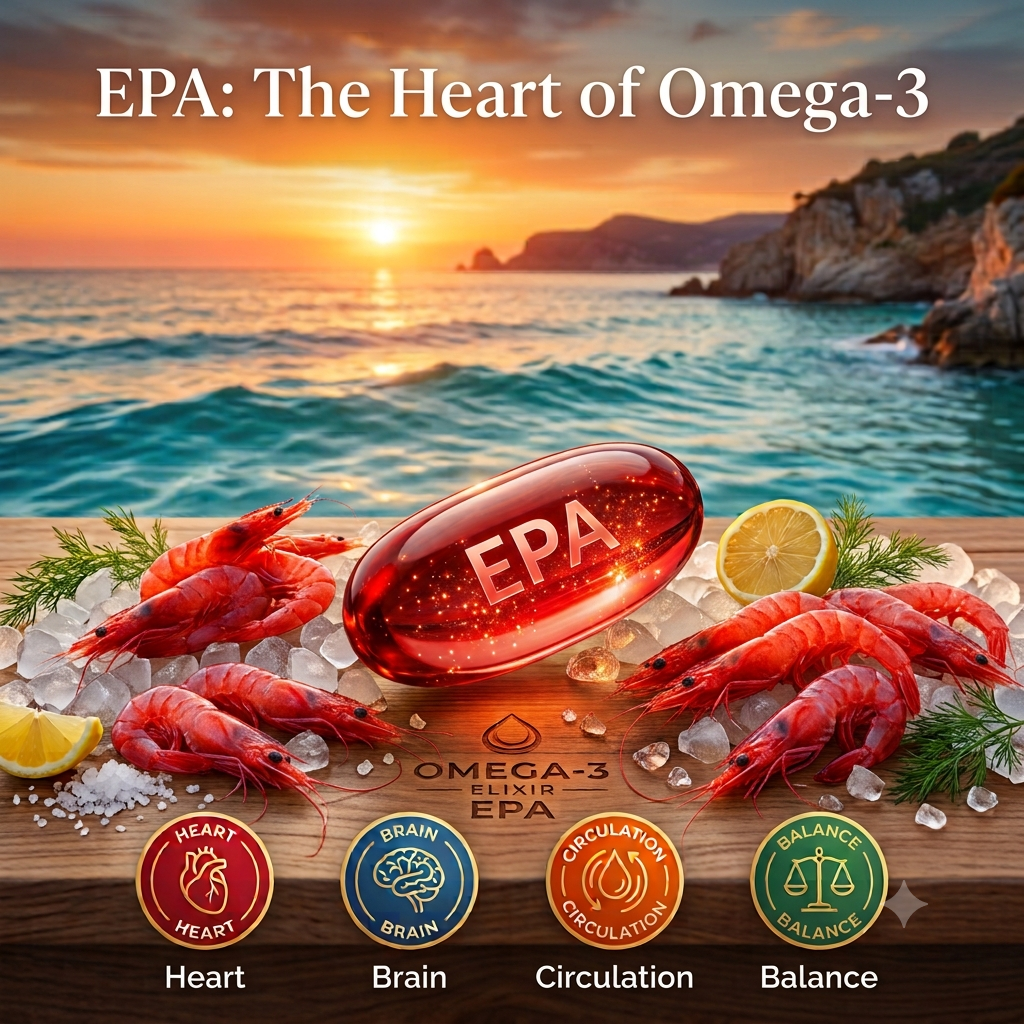
EPA (Eicosapentaenoic acid)
EPA (Eicosapentaenoic Acid) is one of the most important Omega-3 fatty acids, widely recognized for its role in supporting cardiovascular health, brain function, and overall well-being. Together with DHA, EPA has been extensively studied for its positive effects on the body’s natural inflammatory balance, healthy circulation, and nervous system function.
Since the body cannot produce sufficient amounts of EPA on its own, obtaining it through a balanced diet or a high-quality dietary supplement is essential.
What is EPA?
EPA is a polyunsaturated Omega-3 fatty acid naturally found in fatty cold-water fish such as salmon, mackerel, sardines, anchovies, and herring. It plays a key role in producing bioactive compounds involved in numerous physiological processes.
EPA works synergistically with DHA but has unique properties that make it especially valuable for supporting cardiovascular health and maintaining the body’s normal inflammatory balance.
Main Benefits of EPA
Supports Heart Health
EPA contributes to normal heart function and helps maintain cardiovascular wellness as part of a healthy lifestyle.
Helps Maintain the Body’s Natural Inflammatory Balance
EPA participates in the production of lipid mediators involved in regulating normal physiological inflammatory processes, making it particularly appreciated by active individuals.
Supports Brain Function
Although DHA is the primary structural Omega-3 in the brain, EPA also contributes to maintaining the normal function of the nervous system.
Promotes Healthy Circulation
EPA helps maintain healthy cell membrane fluidity and supports normal blood circulation, facilitating oxygen and nutrient delivery throughout the body.
Supports Active Lifestyles
People who regularly exercise may benefit from an adequate intake of EPA as part of a balanced diet to support normal physiological recovery.
Food Sources of EPA
EPA is naturally found in:
- Salmon
- Mackerel
- Sardines
- Herring
- Anchovies
- Tuna
- Seafood
Because dietary intake may vary depending on eating habits and food quality, many people choose high-quality Omega-3 supplements.
When Can EPA Supplementation Be Useful?
EPA supplementation may be beneficial for individuals who:
- Eat little fish.
- Have a low Omega-3 intake.
- Want to support cardiovascular wellness.
- Practice sports regularly.
- Wish to maintain overall health and well-being.
Food supplements should always be used as part of a varied, balanced diet and a healthy lifestyle.
Conclusion
EPA is one of the most valuable Omega-3 fatty acids for overall health. Thanks to its role in supporting cardiovascular function, natural inflammatory balance, circulation, and general wellness, it represents an important nutrient throughout life.
If you are looking for a premium source of EPA together with DHA, phospholipids, choline, and astaxanthin, discover ELIKRILL by Elisir Life and support your heart, brain, and overall well-being every day.