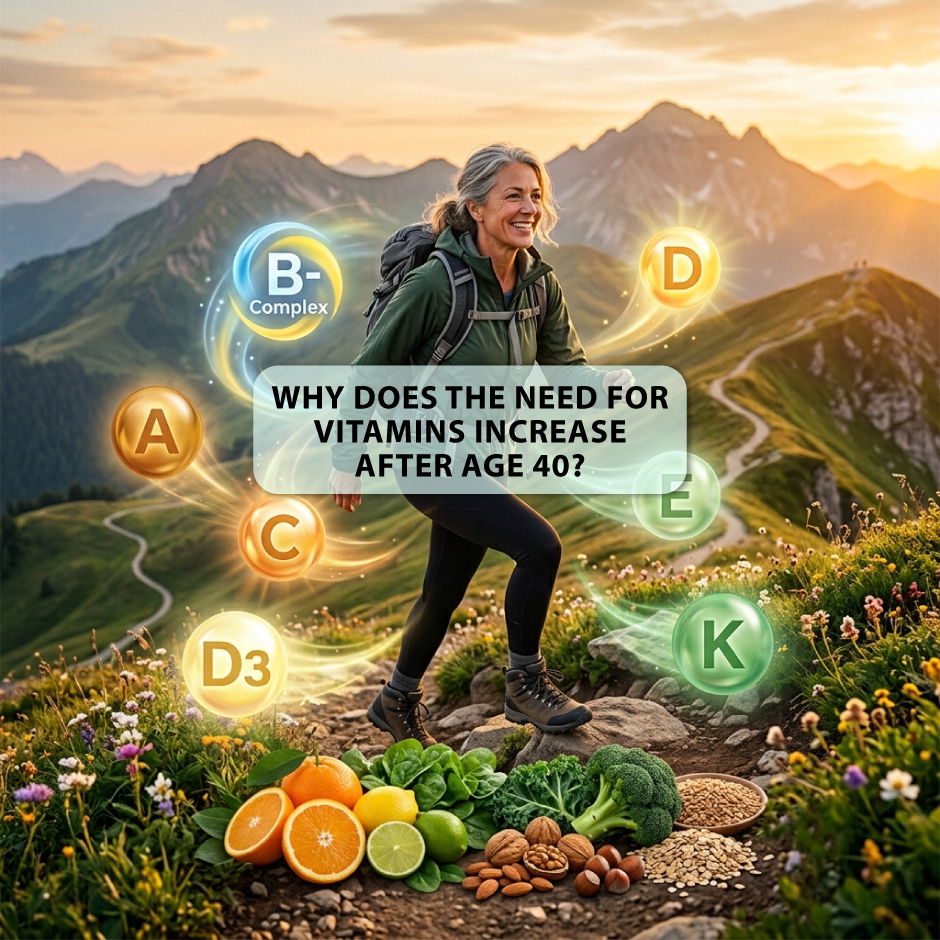
Why does the need for vitamins increase after age 40?
As we age, our bodies undergo several physiological changes that affect metabolism, energy production, and the absorption of essential nutrients. Around the age of 40, many people begin to notice lower energy levels, increased physical and mental fatigue, and slower recovery from daily activities.
These changes are part of the natural aging process, making a healthy lifestyle, a balanced diet, and adequate vitamin intake even more important.
What Changes After 40?
Aging is gradual and affects multiple body systems.
Some of the main changes include:
- slower energy metabolism;
- increased oxidative stress;
- gradual loss of muscle mass;
- hormonal changes;
- reduced absorption of certain vitamins and minerals;
- increased need for nutrients involved in cellular repair.
As a result, the body’s nutritional requirements may increase even when following a balanced diet.
Why Are Vitamins More Important?
Vitamins are involved in hundreds of biochemical reactions essential for good health.
After the age of 40, they become even more important because they help support:
- normal energy metabolism;
- immune system function;
- protection of cells from oxidative stress;
- nervous system function;
- reduction of tiredness and fatigue;
- maintenance of healthy skin and tissues.
An inadequate vitamin intake may contribute to the feeling of reduced energy often associated with aging.
B Vitamins: The Energy Boosters
B vitamins play a key role in energy metabolism.
Vitamins B1, B2, B3, B5, B6, B9, and B12 help convert nutrients into energy while supporting normal nervous system function.
Adequate intake also contributes to reducing fatigue and maintaining normal cognitive function.
Antioxidant Vitamins
As we age, free radical production naturally increases.
Oxidative stress is one of the major contributors to cellular aging.
Vitamin C and Vitamin E help protect cells from oxidative stress and support the body’s natural defense against free radicals.
Vitamin D and Healthy Aging
Many adults have suboptimal Vitamin D levels, especially during seasons with limited sun exposure.
Vitamin D contributes to the maintenance of normal bones, muscles, and immune function, making it particularly valuable after the age of 40.
Nutrition and Supplementation
A varied diet rich in vegetables, fruits, whole grains, legumes, fish, and nuts should always be the foundation of good health.
However, busy lifestyles, stress, physiological changes, and increased nutritional needs may make it difficult to obtain optimal vitamin intake through diet alone.
In these situations, proper supplementation may help support overall well-being when combined with a healthy lifestyle.
Tips for Maintaining Energy After 40
To preserve vitality:
- exercise regularly;
- sleep enough every night;
- maintain a healthy body weight;
- avoid smoking;
- limit alcohol consumption;
- eat a nutrient-rich diet;
- manage stress effectively.
Small daily habits can significantly improve long-term health and vitality.
Conclusion
After the age of 40, our nutritional needs evolve together with our bodies. Adequate vitamin intake supports energy metabolism, immune function, and protection against oxidative stress.
If you are looking for comprehensive daily nutritional support, POWER ANTIAGING VITAMIN PLUS by Elisir Life combines a broad spectrum of vitamins with Coenzyme Q10 to help support everyday wellness.